Industrial Fabrication Solutions

Structural Fabrication
Solutions

Professional structure fabrication services for buildings, bridges, towers, industrial facilities, and infrastructure projects.

Structural Fabrication Solutions
Steel Structure Support
Service Details

Structure Fabrication

Structure fabrication refers to the process of designing, producing, and assembling structural components for various types of buildings and infrastructure projects.

Overview of Structure Fabrication

1. Definition

Structure fabrication involves the creation of structural elements that are used in the construction of buildings, bridges, towers, and other infrastructure.

It encompasses the entire process from design to final assembly.

2. Scope

This includes the fabrication of components like beams, columns, trusses, and other structural elements, often followed by assembly at the construction site.

Key Phases of Structure Fabrication

1. Design and Planning

Engineering Design: Structural engineers create detailed plans and specifications based on load requirements, safety standards, and architectural design.

Material Selection: Choosing appropriate materials such as steel, reinforced concrete, or composites based on strength, durability, and environmental considerations.

2. Material Procurement

Sourcing: Procuring raw materials required for fabrication, including steel plates, beams, and reinforcement materials.

Quality Control: Ensuring that the materials meet the required specifications and standards.

3. Fabrication

Cutting: Cutting raw materials into required shapes and sizes using shearing, sawing, or laser cutting.

Forming: Shaping materials into profiles such as I-beams, channels, or angles through rolling or bending.

Welding and Joining: Assembling components through welding, bolting, or riveting.

Finishing: Applying painting, coating, or galvanizing to protect against corrosion and improve appearance.

Quality, Assembly & Types

4. Quality Assurance and Testing

Inspection: Conducting inspections and tests to ensure fabricated components meet design specifications and quality standards.

Testing: Performing structural tests, such as load testing, to verify the strength and stability of components.

5. Assembly and Installation

Pre-Fabrication Assembly: Assembling parts or modules in the workshop or factory before transporting them to the construction site.

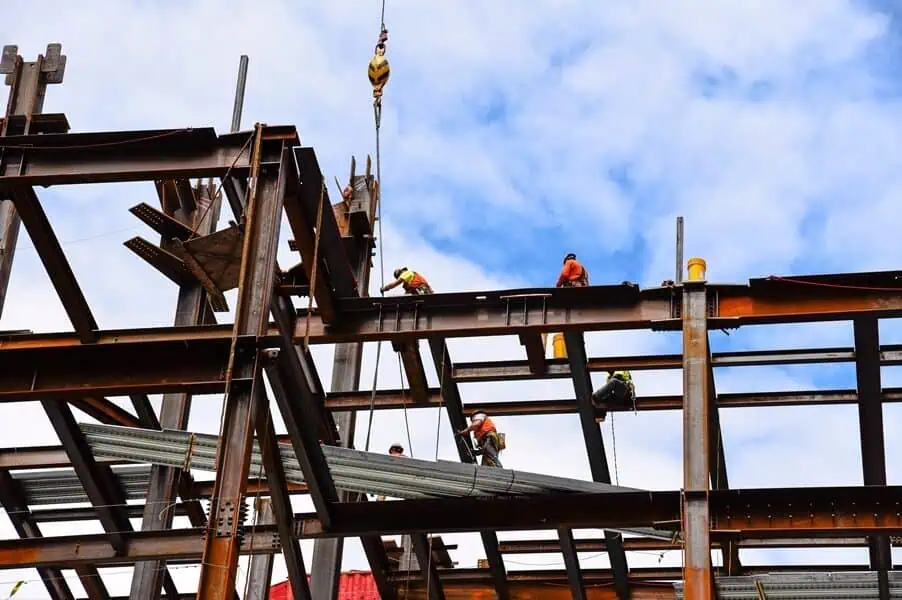
Site Installation: Transporting and installing fabricated components on-site using cranes, rigging, and other heavy machinery.

Types of Structure Fabrication

1. Steel Fabrication

Process: Involves cutting, welding, and assembling steel components to create frames, columns, and beams.

Applications: Used in high-rise buildings, bridges, and industrial facilities.

2. Concrete Fabrication

Process: Creation of reinforced concrete components such as precast panels, beams, and columns.

Applications: Used in buildings, bridges, and infrastructure requiring durable and strong structural elements.

3. Composite Fabrication

Process: Uses composite materials such as fiber-reinforced polymers with high strength-to-weight ratios.

Applications: Used in lightweight structures, aerospace components, and high-performance infrastructure.

Essential Considerations

1. Design Considerations

Load-Bearing Capacity: Ensuring the structure can support anticipated loads, including dead loads, live loads, and environmental forces.

Safety and Compliance: Adhering to building codes, safety standards, and engineering best practices.

2. Material Properties

Strength and Durability: Selecting materials with appropriate strength and durability for the intended application.

Corrosion Resistance: Applying protective coatings or treatments to materials exposed to harsh environmental conditions.

Fabrication Value

01

Strong Structural Support

Structure fabrication creates reliable beams, columns, trusses, and frames that form the skeleton of buildings and infrastructure.

02

Quality & Durability

Proper fabrication, testing, finishing, and installation improve safety, strength, corrosion resistance, and long-term performance.

Structure fabrication plays a major role in developing safe, durable, and efficient buildings, bridges, towers, and infrastructure projects.